

Supporting Teachers’ Mental Health After War, Loss, and Prolonged Stress in Lebanon
Zati Lebanon Association’s PWSBI consultancy supported teachers affected by grief, war-related stress, economic pressure, workplace challenges, and the emotional demands of supporting children in Lebanese schools.
Teachers are often expected to remain calm, supportive, and emotionally available to their students, even when they are experiencing grief, fear, financial pressure, family conflict, and exhaustion themselves. Through the PWSBI – PlayWell: Sahtak Bi Idak consultancy, Zati Lebanon Association provided teachers with confidential and practical mental health and psychosocial support tailored to their individual needs.
The consultancy created safe spaces where teachers could speak about pressures that were difficult to address in their professional environments, including the emotional consequences of the 2024–2025 war period in Lebanon, bereavement and family loss, fear of losing loved ones, economic insecurity, workplace stress, and the impact of prolonged instability on their ability to work with children.
All information used for learning and reporting was anonymized, and personal stories were documented only through general, safeguarding-sensitive themes.
The Emotional Impact of War and Loss on Teachers
The war and its aftermath did not affect teachers only through direct exposure to insecurity. Participants also described the cumulative impact of displacement and disruption, reduced household income, uncertainty about the future, fear for family members, distressing memories, and the pressure to continue working while emotionally overwhelmed.
For some teachers, the period also included recent bereavement and unresolved grief. One documented assessment began with a stress level of 8/10, with grief affecting sleep, appetite, emotional regulation, relationships, and readiness to continue working with children. The teacher reported crying, irritability, reduced appetite, and concern about being emotionally available in child-focused activities. Individual grief-sensitive support and additional follow-up sessions were therefore prioritized.
Other teachers discussed fear of future loss, grief-related memories, emotional overload, and difficulty speaking openly with family members. War-related and economic stress sometimes appeared through crying, overthinking, physical tension, anger, headaches, stomach discomfort, shortness of breath, and difficulty separating present reality from feared future events.
The sessions did not pressure participants to disclose detailed traumatic experiences. Instead, they focused on safe emotional expression, stabilization, coping, and identifying when additional or specialized support might be required.
Main Themes Addressed During the Consultancy
Although every teacher had a different experience, several recurring themes emerged:
Grief, bereavement, and fear of loss: Teachers were supported to identify grief reactions, express emotions safely, reduce self-blame, and understand that grief may affect concentration, appetite, sleep, anger, and professional functioning.
War-related and economic pressure: Participants discussed uncertainty, interrupted work, reduced income, family responsibilities, insecurity, and the emotional burden of continuing to function during prolonged national crises.
Stress and emotional regulation: Teachers learned to recognize early warning signs such as rapid anger, crying, trembling, body tension, headaches, guilt, overthinking, and emotional shutdown.
Boundaries and over-responsibility: Several participants described placing other people’s needs before their own, finding it difficult to say no, feeling guilty after setting limits, or taking responsibility for solving the problems of relatives, colleagues, students, or friends.
Workplace recognition and professional identity: Some teachers felt that their experience, effort, or role was not sufficiently recognized by schools or administrations. This contributed to frustration, reduced confidence, and emotional exhaustion.
Family, interpersonal, and relationship conflict: Individual sessions provided a confidential setting to work on communication, parental influence, fear of rejection, guilt, loneliness, and decision-making.
Classroom stress and inclusion: Teachers raised concerns about classroom chaos, student aggression or disrespect, difficulties maintaining discipline, inclusion cases, limited administrative follow-up, and uncertainty about referral and escalation procedures.
Practical Tools Used With Teachers
The consultancy emphasized tools that teachers could continue using independently after the sessions. These included:
- 4-7-8 and diaphragmatic breathing
- 5-4-3-2-1 grounding
- Stress thermometers and trigger mapping
- Body-sign and emotion awareness
- The STOP technique
- Circle of Control
- Respectful boundary sentences
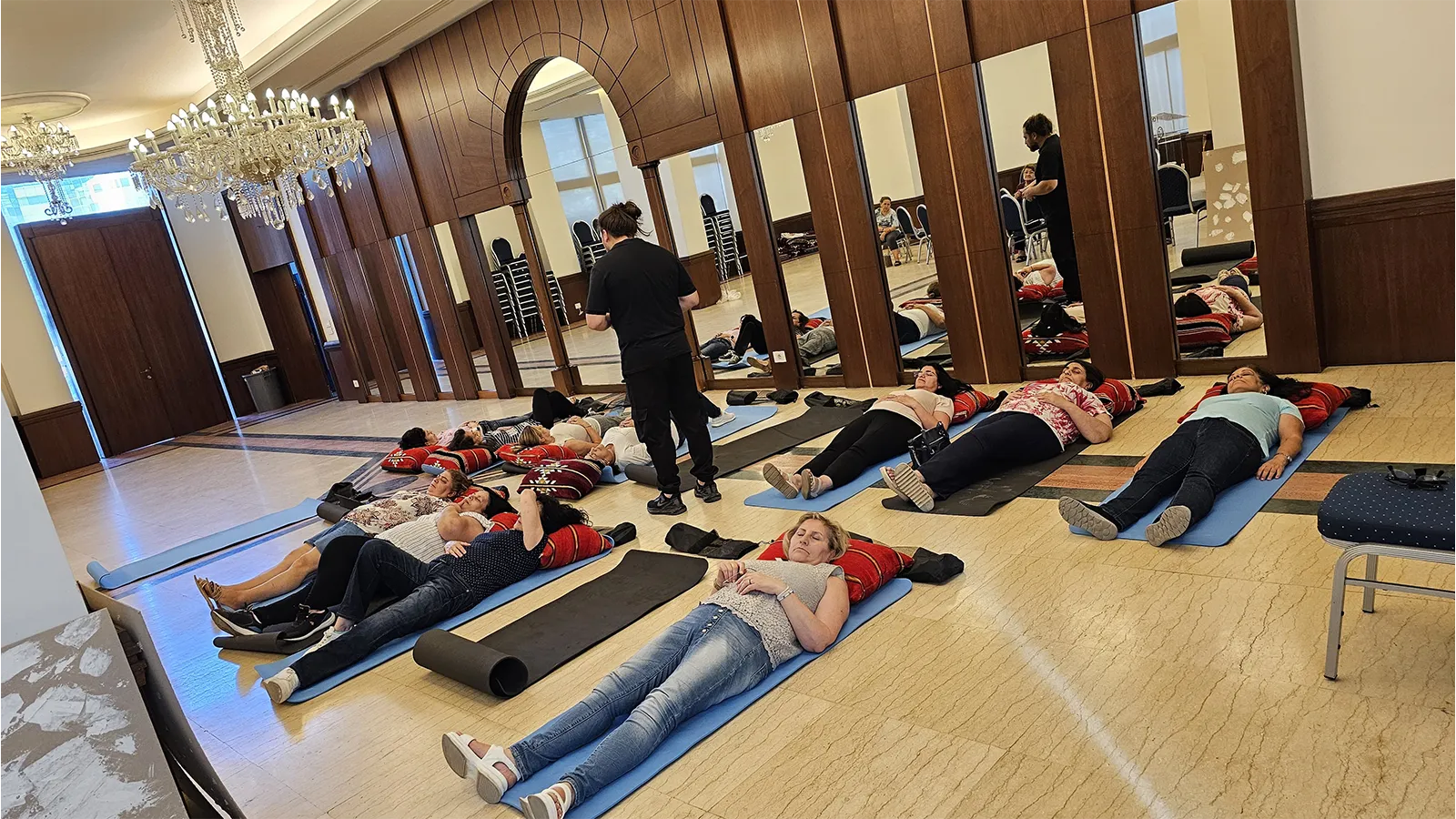
- Guided relaxation and muscle-release exercises
- Cognitive reframing
- SMART wellbeing goals
- Personal wellbeing plans
- Referral awareness and support planning
These tools helped participants pause before reacting, return to the present moment, reduce physical activation, challenge fear-based predictions, and make decisions without automatically responding from guilt, fear, or pressure.
For example, one teacher’s stress decreased from 7/10 to less than 1/10 after breathing and boundary-setting practice. Another session documented a decrease from 4/10 to 2/10, while a final follow-up session reduced stress from 3/10 to 1/10. In a grief-sensitive follow-up, stress decreased from 5/10 to 2/10.
Across the documented cases reviewed, assessment stress levels ranged from approximately 2/10 to 8/10, with some participants verbally describing distress reaching 10/10 when discussing accumulated pressures. Completed endlines in several cases showed final stress levels of 1/10 or 2/10, alongside strong feedback on the usefulness, relevance, practicality, and safety of the sessions.
These figures represent documented individual cases rather than a single average for all participants.
An Inclusive and Needs-Based Approach
Inclusivity was central to the PWSBI approach. Teachers were not expected to follow an identical pathway regardless of their circumstances.
Sessions were primarily delivered online, reducing transport and geographical barriers and allowing teachers to participate around demanding work schedules. Timing, pacing, and session length were adapted when needed. Sensitive topics, including bereavement, family conflict, relationship concerns, and emotional distress, were addressed privately rather than through group-only discussion.
Participants with higher stress, recent grief, panic-related physical symptoms, or persistent emotional needs were prioritized for additional sessions. Extra support was allocated according to need, including grief-sensitive continuation, emotional regulation, safe closure, and referral monitoring.
The facilitator also adapted techniques to individual responses. For example, breathing exercises could be slowed or modified when a participant experienced dizziness, while grief-focused sessions were paced gently to avoid emotional overload.
The sessions incorporated inclusion-related classroom concerns, including autism, disability, different learning and behavioral needs, access barriers, child distress signs, and safe escalation or referral. This helped teachers consider both their own wellbeing and the diverse needs of the children they support.
The Effect of War and Instability on Children at School
Teachers’ wellbeing cannot be separated from children’s wellbeing. Participants described students showing signs such as fear, anxiety, aggression, withdrawal, difficulty concentrating, defiance, sadness, emotional dysregulation, and reduced engagement.
War, loss, family stress, disrupted routines, economic hardship, and insecurity can appear in children through behavior rather than words. A child who becomes aggressive, distracted, silent, restless, or unable to follow instructions may be communicating distress.
Teachers also reported that supporting these children became more difficult when they were personally grieving or emotionally exhausted. One assessment specifically identified concern about managing children’s discipline and behavior while experiencing acute bereavement, with low confidence in responding to children’s distress at that stage.
PWSBI therefore supported teachers to recognize child distress signs, respond without escalation, create predictable and emotionally safer classroom environments, establish appropriate boundaries, and understand when a child’s needs should be referred to school support systems or specialized services.
Key Findings
The consultancy highlighted that teachers need more than one-time awareness sessions. They benefit from confidential spaces where they can discuss personal and professional stress without judgment and receive practical tools that can be applied immediately.
The documented progress showed:
- Reduced stress during and across sessions
- Improved recognition of emotional and physical warning signs
- Greater use of breathing, grounding, STOP, and boundary-setting
- Increased confidence in saying no and protecting personal wellbeing
- Better understanding of grief and emotional regulation
- Improved awareness of child distress and referral needs
- Completion of practical personal wellbeing plans
- Strong appreciation for safe, respectful, and confidential facilitation
Most documented cases remained at Low or Monitor risk, while higher-need grief and emotional-distress cases received additional monitoring and follow-up. No urgent safeguarding or protection referral was identified in the closure reports reviewed, while referral options remained available if distress worsened or exceeded the consultancy’s scope.
Supporting the People Who Support Children
Teachers are a central part of children’s protective environment. When teachers receive the tools and space to regulate their own stress, process grief, establish boundaries, and seek help, they are better able to respond calmly and compassionately to children.
Through PlayWell: Sahtak Bi Idak, Zati Lebanon Association reinforced an essential message: supporting teachers’ mental health is not separate from supporting students. It is a necessary investment in safer classrooms, stronger relationships, inclusive education, and the long-term well-being of school communities across Lebanon.